

While sketching these orchids at the foot of the front patio this morning, a butcher bird and kookaburra came down to feed on grubs and lizards.
While sketching these orchids at the foot of the front patio this morning, a butcher bird and kookaburra came down to feed on grubs and lizards.
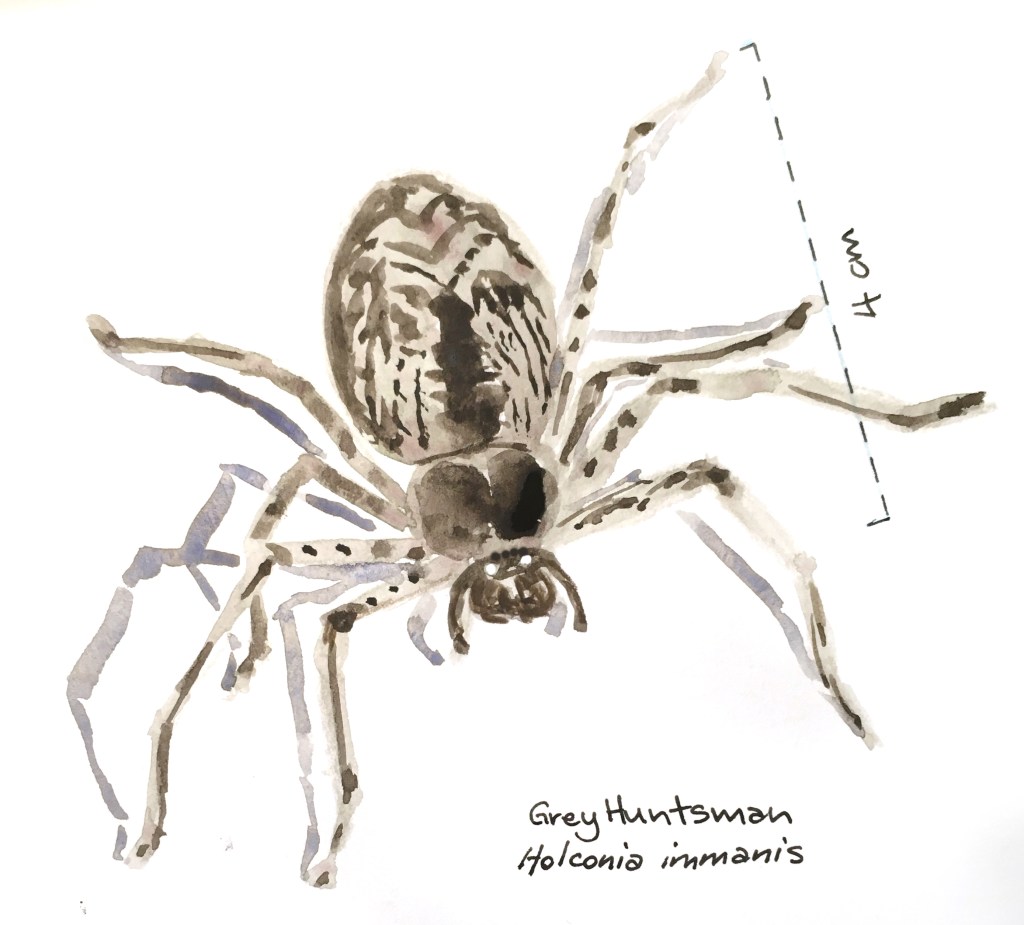
This big beauty is high on the bathroom wall in our current lodgings, quietly minding her own business.
Lisa Vankula-Donovan (on Instagram as @wannabe_entomologist) is my hunstman-whispering hero. I don’t know how she gets them to walk calmly over her; they usually scoot rapidly away when approached.

The old fibreglass boat on Maggie and Merv’s dam tells the tale of recent storms.


This week’s theme seems to be swimming holes.

I think this Golden Orb Weaver is Trichonephila plumipes, sometimes called a Tiger Spider. Its web glows yellow, and the legs are a light orange colour, black at the joints. Big spiders are so impressive! This type is not confined to the tropics, so I hope to see more when travel to the sub-tropics.

There are some 750 different types of pandanus; I have no idea which one I was sketching! I love their aerial prop roots.


Another day, another idyllic swimming hole 😊 September is a great month to visit the tropics. Not too hot, not too wet, not too many mosquitos. No tribulation at all, in fact.

We’re in tropical Far North Queensland, in a national diversity hotspot. Buttress roots, wait-a-while, butterflies, and fan palms abound. Also, gorgeous swimming holes. And crocodiles, though we haven’t seen any of them yet (phew!) But we did find a peppermint stick insect today, so that was really cool!
My son is showing us all his favourite spots. So much beauty to be found here.

Wendy Whiteley’s secret garden has been on my to-visit list for years. It was just as magical as I’d expected.

Common brushtail possums are the Australian marsupials most often seen by city dwellers, as they can thrive in a wide range of natural and human-modified environments. They are inventive and determined foragers with a liking for kitchen raids, fruit trees, and vegetable gardens, as our Wollongong friends well know!
This baby was in the temporary care of our wildlife rescuer friend when we stayed with her the other night. Pretty darn cute.

We made it to Sydney! We paid a late afternoon visit to Bradleys Head, a headland protruding from the north shore of beautiful Sydney Harbour. It’s part of the local national park. I sketched while K took photos, then we headed to Eastwood to spend the night with friends.

