Annette and I drove up the coast a ways to join the Channel Island Nature Journalers for a windswept nature journaling session at Carpinteria. (Note to my Australian friends: the emphasis is on the penultimate syllable, Car-pin-ter-REE-a) A good (blustery) time was had by all.
I spent all day indoors at the Park, in a first aid class. It was so nice to emerge into the late afternoon sunshine, and notice the new leaves on the valley oaks.
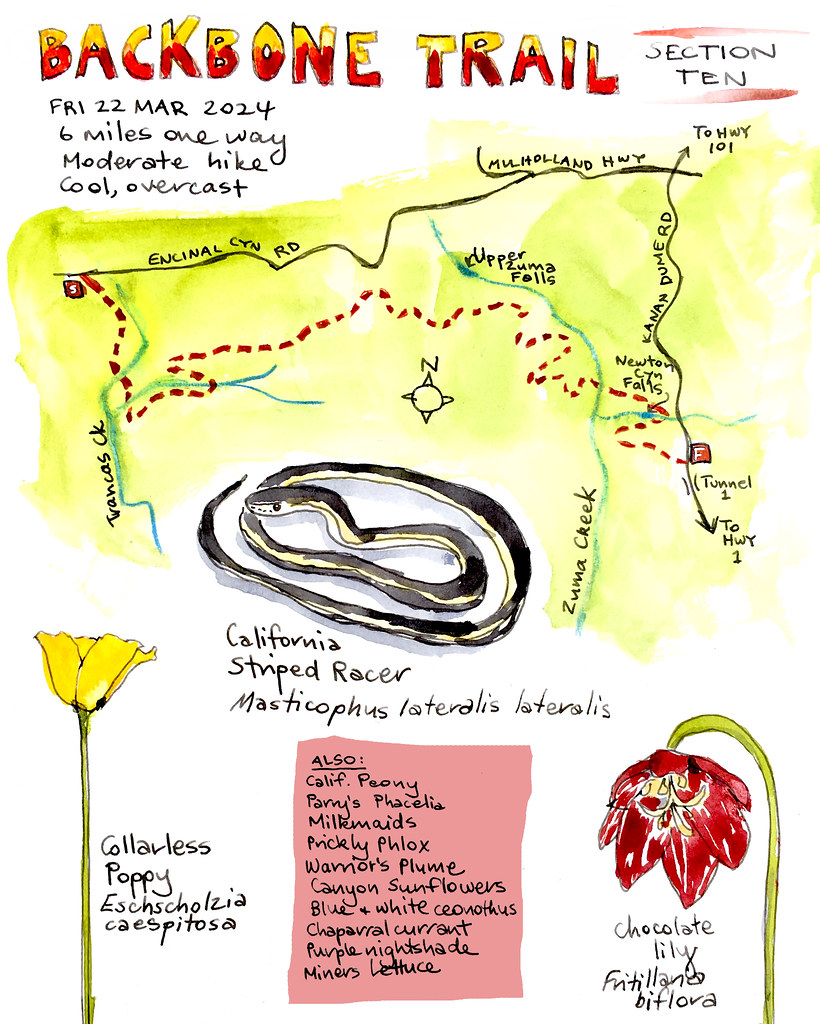
Lovely day out on the trails. Still plenty of water in the creeks and waterfalls, and the wildflowers are really starting to pop. Feeling very grateful to live in these beautiful mountains.
Look what I just found! I don’t know if it’s an Anna’s or an Allen’s hummingbird. The nice thing about this nest location is we can see it through in the window. Incubation period for an Anna’s is 16 days, for an Allen’s 17-22 days. Stay tuned!
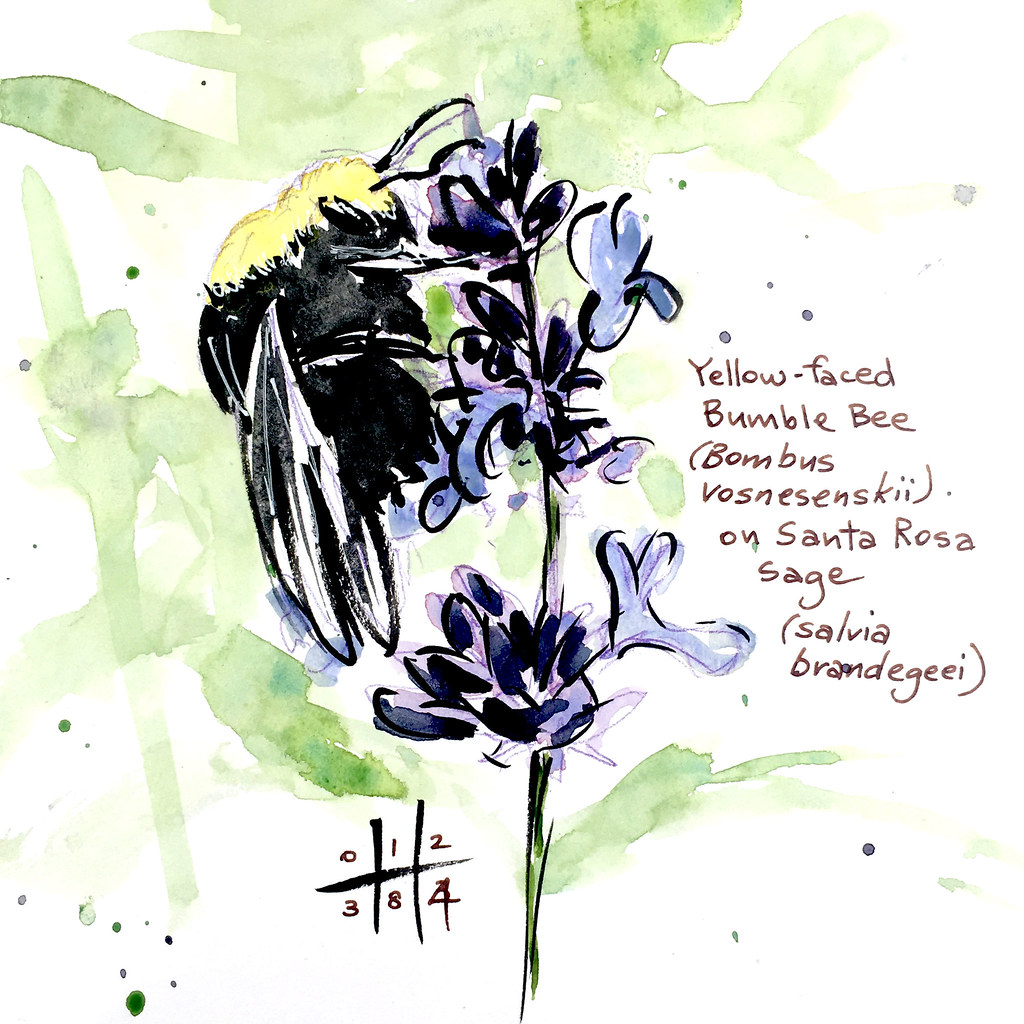
According to iNaturalist, there are 24 species of bumblebees in California. The one that is busily pollinating our sage is the Yellow-faced Bumblebee. Bombus vosnesenskii is among the most common bee species on the West Coast of the United States, and the most common bumblebee from Oregon northward. The bee nests underground, usually in colonies of 200-300 workers.
I was actually surprised when I looked up the planting date on this shrub; it’s only been in the ground for 2.5 years — it seems longer. Looking at pictures of mature specimens, I’m excited for the future. But now I’m wondering why we went with a cultivar, not a local Ceanothus. Perhaps it’s all that was available at the nursery?
While camping, I read and enjoyed this short book by Tristan Gooley. My main takeaway is this (far from simple) exercise: Wherever/whenever you are outdoors, ask yourself “In what direction am I looking?” and “What time is it?“ (Learn to) use nature to find the answers. I’d like to get better at this.
We left Stovepipe Wells in the late morning, and headed south. The plan was to find the Geologist’s Cabin and perhaps spend the night there. 25 mi / 40 km of rough dirt road took us about two and a half hours to traverse. The location is spectacular, on a rise at the western end of Butte Valley, in full view of majestic Striped Butte rising from the valley floor. But others had arrived ahead of us. Though they graciously offered to share the space, they also told us about another cabin further down the track.
Thus we discovered Stella’s Cabin, a rough structure of stone, mud and corrugated iron, once home to prospectors Clint and Stella Anderson. Stella stayed on alone for five years after Clint’s death in 1973. Having lived in similarly primitive conditions in my younger years, I felt right at home. The wood stove worked fine, and we spent a cozy night on the floor. In the morning we contributed some doggerel to the visitors’ log, before starting the long trek home.
Stella’s Cabin was for sure the cherry on top of a fabulous Death Valley visit. We just hope we didn’t contract hantavirus from all the rodent droppings🤞🏻.






 hashiworks