

At the ruins of the Roberts Ranch House in Solstice Canyon (destroyed by fire in 1982), native and non-native plants vie for sunlight. Bird of paradise, ginger, bananas and limes grow under and between oaks, sycamores, and toyon.
At the ruins of the Roberts Ranch House in Solstice Canyon (destroyed by fire in 1982), native and non-native plants vie for sunlight. Bird of paradise, ginger, bananas and limes grow under and between oaks, sycamores, and toyon.


The lower parts of Solstice Creek are well-visited, but not many people climb Sostomo Trail to enjoy the gorgeous crossing on the upper creek. The three of us settled into a bed of fallen sycamore leaves and enjoyed the quiet shade. I liked seeing the little backswimmers (Notonectidae family) — I’d also observed these aquatic insects in Australia.
Backswimmers, as the name implies, swim inverted, using their long hind legs to paddle vigorously. They prey on organisms as large as tadpoles and small fish and can deliver a painful “bite” to humans—actually a stab from their sharp proboscis. These insects inhabit still freshwater in lakes, ponds, and marshes, and can also be found in garden ponds and occasionally in swimming pools. Despite being primarily aquatic, backswimmers are effective fliers, allowing them to easily disperse to new habitats.


Tucked up in the box end of Solstice Canyon are the ruins of the Roberts Ranch House, “Tropical Terrace”, designed by renowned architect Paul R. Williams in the 1950s. Although it was specifically designed to survive a wildfire, the pumps, pipes and pools were not maintained after the owners’ deaths, and the home burned down in 1982. Extensive paving, brickwork and chimneys remain, along with many non-native plants and trees. It’s now National Park Service property.

We looked for newts in the pools where Annette and I had found them last week, but nary a newt was seen today.
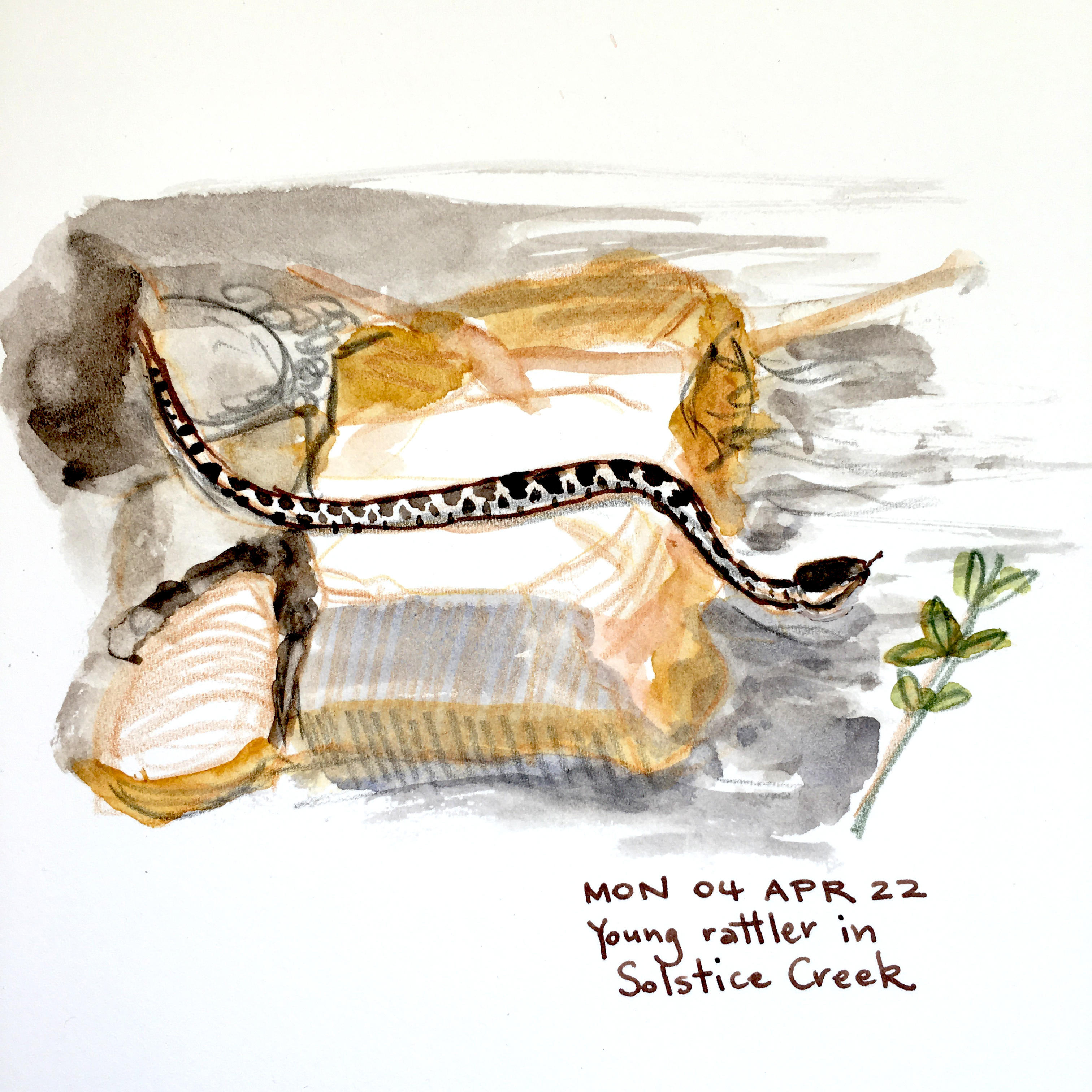
After my hike in Solstice Canyon, I had a little sit down on a rock by the creek. This fella saw me before I saw it, and froze while I took photos and did a rough sketch (completed at home). Then we both went on our merry ways.

