

Yep, it was a raccoon — we heard a lot of chittering and hissing as we tried to sleep.
Yep, it was a raccoon — we heard a lot of chittering and hissing as we tried to sleep.

The coyotes at our place have been unusually bold lately, coming within meters of the house in the middle of the day. We always ‘haze’ them to discourage their presence, yelling and chasing them. Bodie puts on a good show, but she’s getting old, and the coyotes seem to know she’s not much of a threat anymore.

Quick sketch after a loooong hike.

We have a taxidermied ringtail (Bassariscus astutus) in the Visitor Center at the Park. I’d sure love to see a live one.
Ringtails are members of the raccoon family. They are found in many areas of California, but they are rarely seen. They have large eyes and upright ears, which assist them to navigate and hunt by night. Their long tail helps them to balance while climbing in trees and rocky places.
Ringtails eat rodents, birds, rabbits, reptiles, frogs, fruit and berries. They prefer a solitary existence though they may occasionally share a den. They are preyed upon by foxes, coyotes, raccoons, bobcats, hawks, and owls.
Smaller than a house cat, its body measures 30–42 cm (12–16.5 in) and its tail averages 31–44 cm (12–17 in) from its base. Ringtails are said to be easily tamed, and can make an affectionate pet and effective mouser. They are the state mammal of Arizona.

Notes from a presentation by the Cougar Conservancy, part of our continuing education as docents at Malibu Creek State Park.

It’s Groundhog Day! The groundhog, also known as the woodchuck (along with a bunch of other monikers), is a rodent of the family Sciuridae, belonging to the group of large ground squirrels known as marmots. Despite the popular tongue-twister, the etymology of the name woodchuck is unrelated to wood or chucking. It stems from an Algonquian (possibly Narragansett) name for the animal, wuchak.
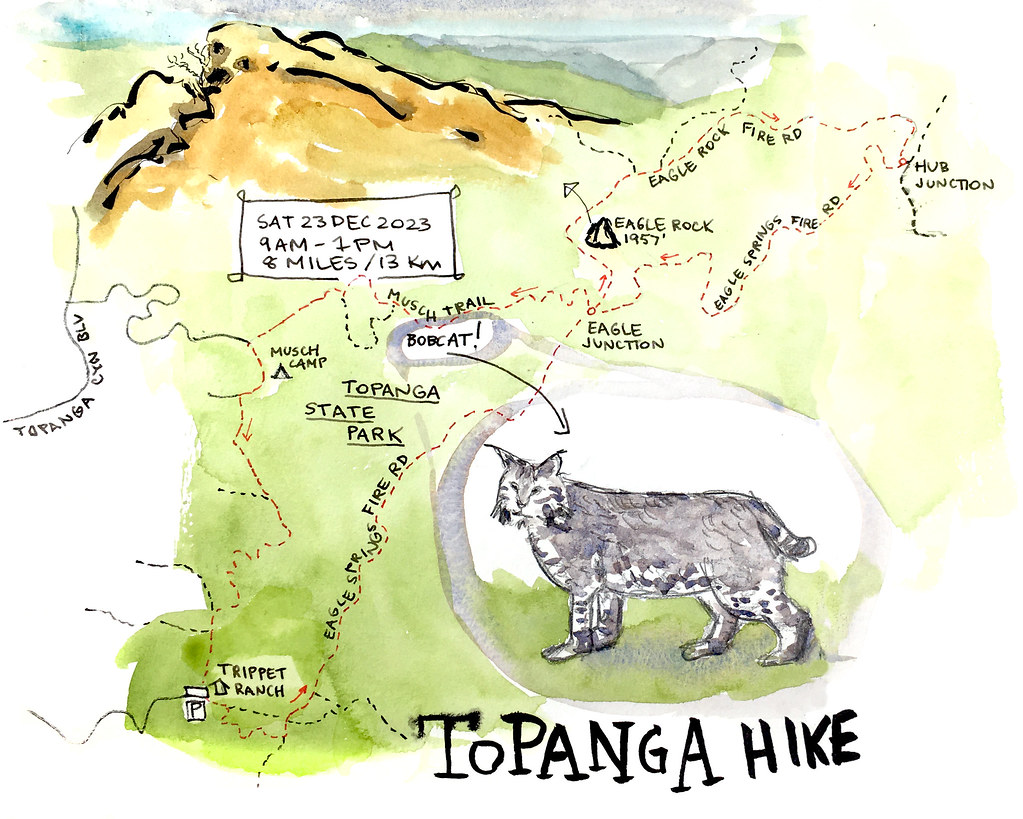
Thank you, nature, for the best gift — a bobcat sighting!

In celebration of International Cheetah Day, I attended an interesting session with John Muir Laws and the Cheetah Conservation Fund.

Sketching black things with John Muir Laws, learning to see tones and colours within the darks.

We bought some new skulls for the Visitor Center (legally and ethically obtained).

