nocturnal

I’m an early-to-bed kinda girl, so I’m usually fast asleep by the time the creatures of the night come out to explore and hunt. I’d really love to see a ringtail, but the last live observation recorded in iNaturalist in my area was in 2014. (There was a roadkill recorded in 2022.) So I’m thinking my chances are slim, even if I become nocturnal myself.

It was a quiet day at the MCSP Visitor Center on Sunday, so I sketched these taxidermied specimens in between chatting with visitors.

Chrysocus cobaltinus

Chrysocus_cobaltinus

This iridescent little beetle (about 8mm long) was on a milkweed plant at the Park yesterday. So bright and metallic!

Both adult and larvae C. cobaltinus life stages eat dogbane and milkweed species. These plants contain toxic molecules known as cardenolides, which the beetle is resistant to. In fact, it stores the cardenolides in its glands, and uses them against predators.

Cobalt Mikweed Beetles are similar to click beetles in being able to launch themselves a couple of times the length of their body. Little but mighty!

field ecology weekend

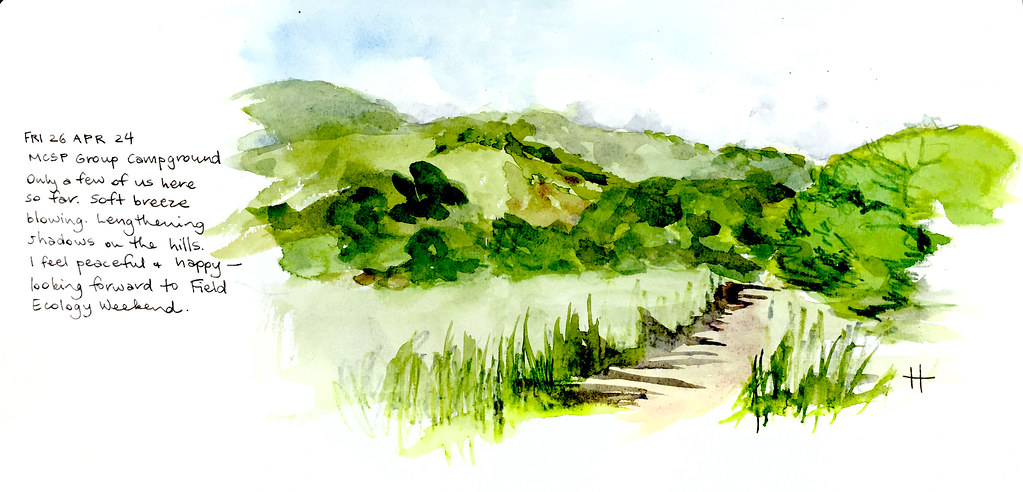
Every year, the Malibu Creek and Topanga Canyon Docents gather for a weekend of camping, outdoor education, and camaraderie, known as Field Ecology Weekend. I’m just home from the 38th Annual FEW. Speaking as one of the organisers, it was everything we hoped it would be.