

Cultellunguis ingenuus

At first I thought I had the answer, but all I got was more questions. The joys of nature journaling 💚
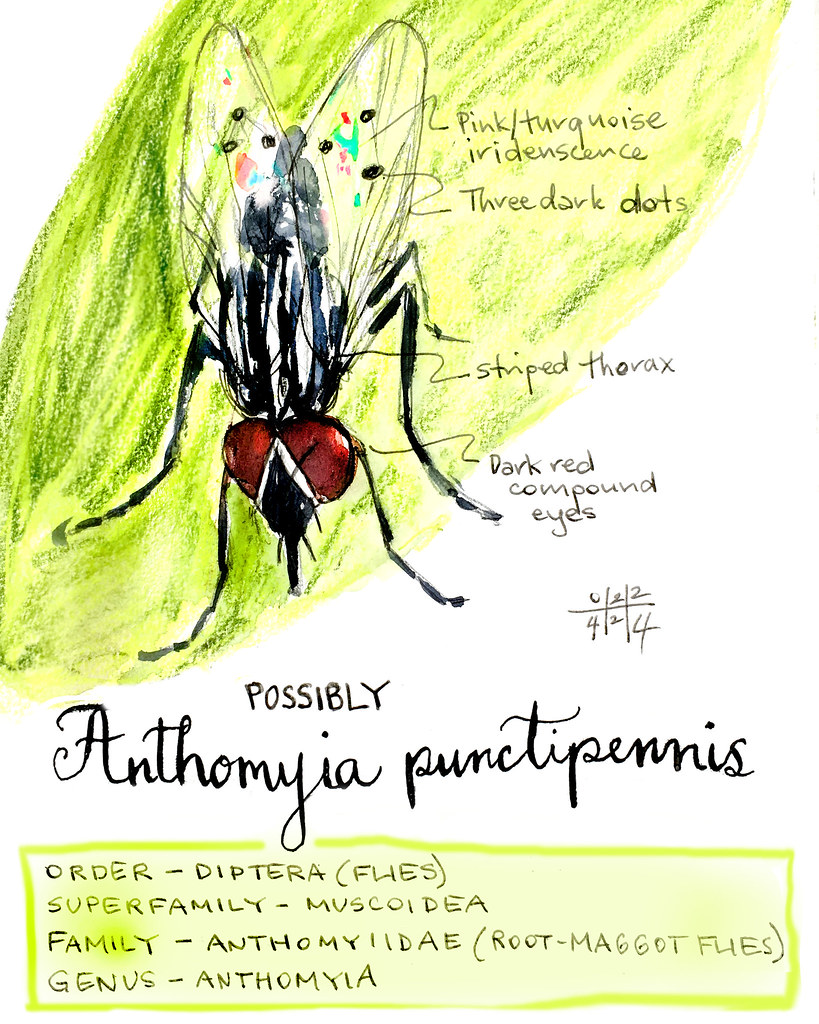
After picking sixty (60!) snails off our little orange tree this morning, I noticed this handsome fly on one of the ravaged leaves. I am no entomologist, so the ID could be wrong. Looking at the distribution map in iNaturalist, Anthomyia species are far more common in the Southern Hemisphere than the northern, so possibly I’m way off. I was attracted to the strong dark dots on the wings; I suspect that are a key feature for identification.

A rainy day is a perfect time to take a John Muir Laws class on drawing insects. Isn’t this guy kooky? Trachelophorous giraffa is endemic to Madagascar, and shouldn’t be confused with the New Zealand Giraffe Weevil (Lasiorhynchus barbicornis). In both species, the males have extremely long heads.
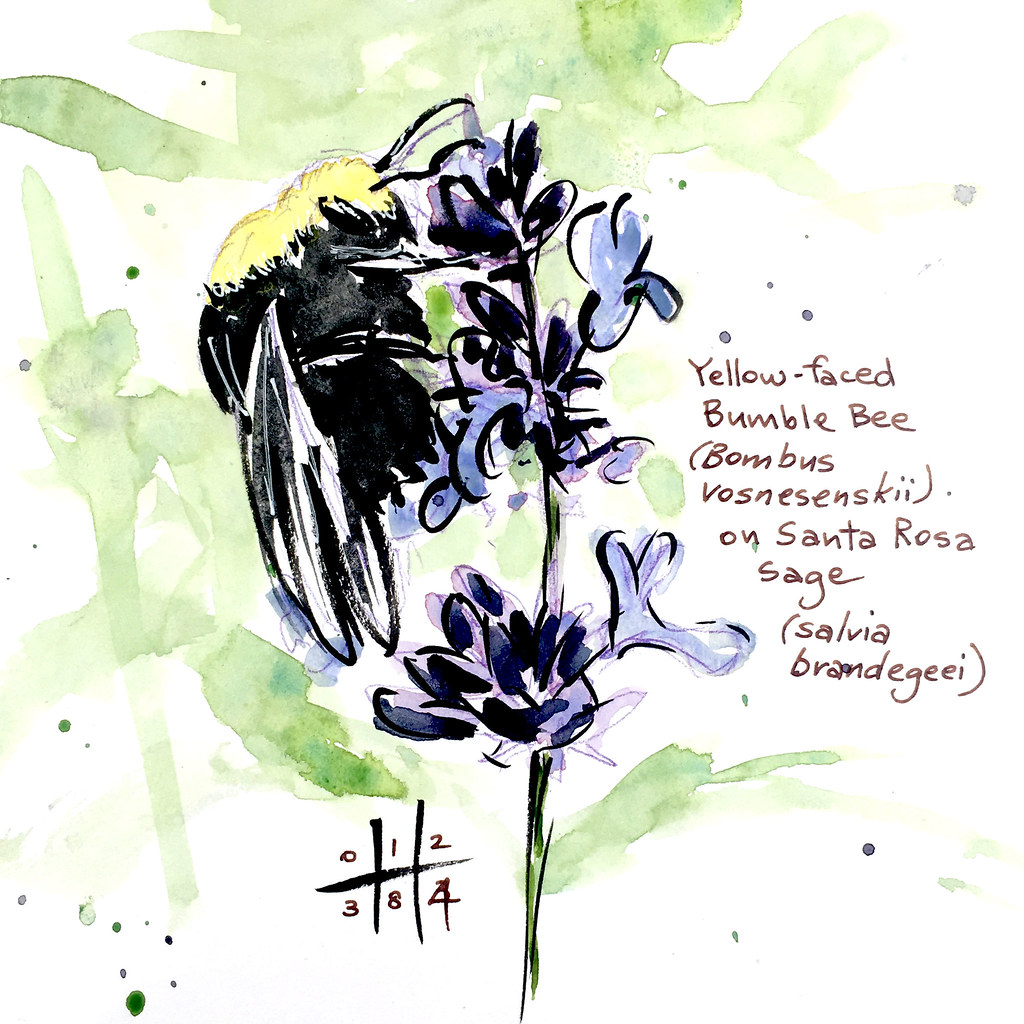
According to iNaturalist, there are 24 species of bumblebees in California. The one that is busily pollinating our sage is the Yellow-faced Bumblebee. Bombus vosnesenskii is among the most common bee species on the West Coast of the United States, and the most common bumblebee from Oregon northward. The bee nests underground, usually in colonies of 200-300 workers.


Large milkweed bugs are seed-feeders; their main diet is, not surprisingly, milkweed seeds. So I’m not sure what this lady was doing on the sweet potato vine.

The cabbage whites (Pieris rapae) are all over my brassicas, of course, but I’m also seeing them in the Park and on ornamentals in the neighbourhood. They seem to especially like purple lantana flowers. Do they also lay their eggs on the plant? Do their larvae eat the leaves, as they do my kale?
On the subject of lantana, it’s highly invasive where I‘m from. It covers an estimated four million hectares in eastern Australia, often to the exclusion of wildlife, people and livestock. So it’s taken me a long while to get used to seeing it as a cultivated garden plant here in Southern California.
Eat up, cabbage whites—lantana not kale!

Nature journaling very tiny things, with the help of a microscope. I was interrupted by the grosbeak strike, so got no further with this page.

It’s fun to come across living organisms in unexpected places.
 hashiworks