pepsis

The tarantula hawk is one of the largest parasitoid wasps, using its sting to paralyze its tarantula prey before dragging it to a brood nest as living food. A single egg is laid on the spider, hatching to a larva which eats the still-living host. They are found on all continents except Antarctica.

Tarantula hawk wasps are relatively docile and rarely sting humans without provocation. However, the sting is among the most painful of all insects’, though the intense pain only lasts about five minutes. In terms of scale, the wasp’s sting is rated near the top of the Schmidt sting pain index, second only to that of the bullet ant, and is described by Schmidt as “blinding, fierce, and shockingly electric”.

melozone crissalis

The plants in front of the kitchen window have effectively stopped the bird strikes, and are providing a source of enjoyment for both humans and avians. It was fun to watch this California towhee hop on to the fuchsia frame to eat the ripe berries.

Dudleya

Dudleya is a relatively obscure genus of succulents. Species come in multiple divergent sizes and forms, though most readily hybridise. Ten species are on the California state list of threatened or endangered plants.

Poached plants are often shipped to East Asia, especially South Korea. In Sept 2021, California state law AB 223 was signed, making it illegal to harvest any Dudleya species in CA without a permit or landowner permission, and establishing penalties for individuals convicted of doing so. This was the first CA law specifically drafted to protect plants from poaching.

eucalyptus globulus

The blue gum Eucalyptus globulus, native to southern Australia, is one of the most widely planted eucalypts in the world*. The bark is mostly smooth, seasonally cream to pale grey to orange-tan, shedding in long strips which often remain hanging in the canopy. The trees are very fast growing (up to 60m tall), and tolerant of salt-laden coastal winds and cold temperatures.

The species has naturalised in California and become invasive in coastal areas. We have several advanced trees on our block; I don’t know whether they self-seeded or were planted by the original owner. Even though they don’t ‘belong’ here, and they drop fire fuel, we kind of love them …

*Source: Taller Eucalypts for Planting in Australia by Dean Nicolle

The art of soil

My daughter gifted me the four pan mineral suite from The Art of Soil. The pigments behave a little differently to regular watercolours, so I’m enjoying playing with them to learn their properties and how best to use them. They are very muted and grainy, which I love. They can be mixed with other brands to good effect. (The bright green above includes some Daniel Smith green gold.)

edible weeds

Two of the most successful weeds here at our place are mustard and mallow, which are quick to germinate after the first winter rains. There’s already a thick crop emerging on the sward, though unfortunately that area is used by the dog for relieving herself, so we won’t be harvesting any of those leaves for the soup pot.

corona blues

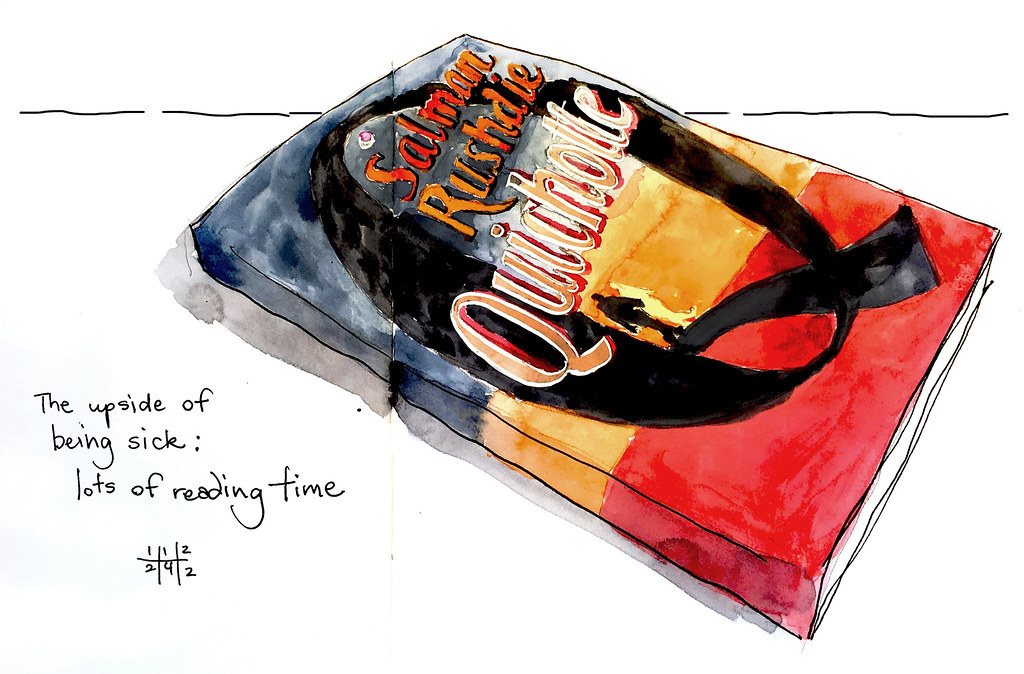
I spent the morning and half the afternoon happily working on a quilt, but noticed that my back was getting really sore. I stopped to stretch and make some tea and suddenly realised that I was SICK. Yep, after managing to avoid it for two years, I have caught the dreaded ‘rona.

Am I still going to feel like daily sketching as the virus runs its course? Of course I’m hoping for a light touch and a quick recovery, but we’ll see!