It’s National Moth Week! I haven’t yet seen any awesome moths lately, so here’s one from last August … but I did see a tarantula hawk today, so that was pretty cool!

It’s National Moth Week! I haven’t yet seen any awesome moths lately, so here’s one from last August … but I did see a tarantula hawk today, so that was pretty cool!


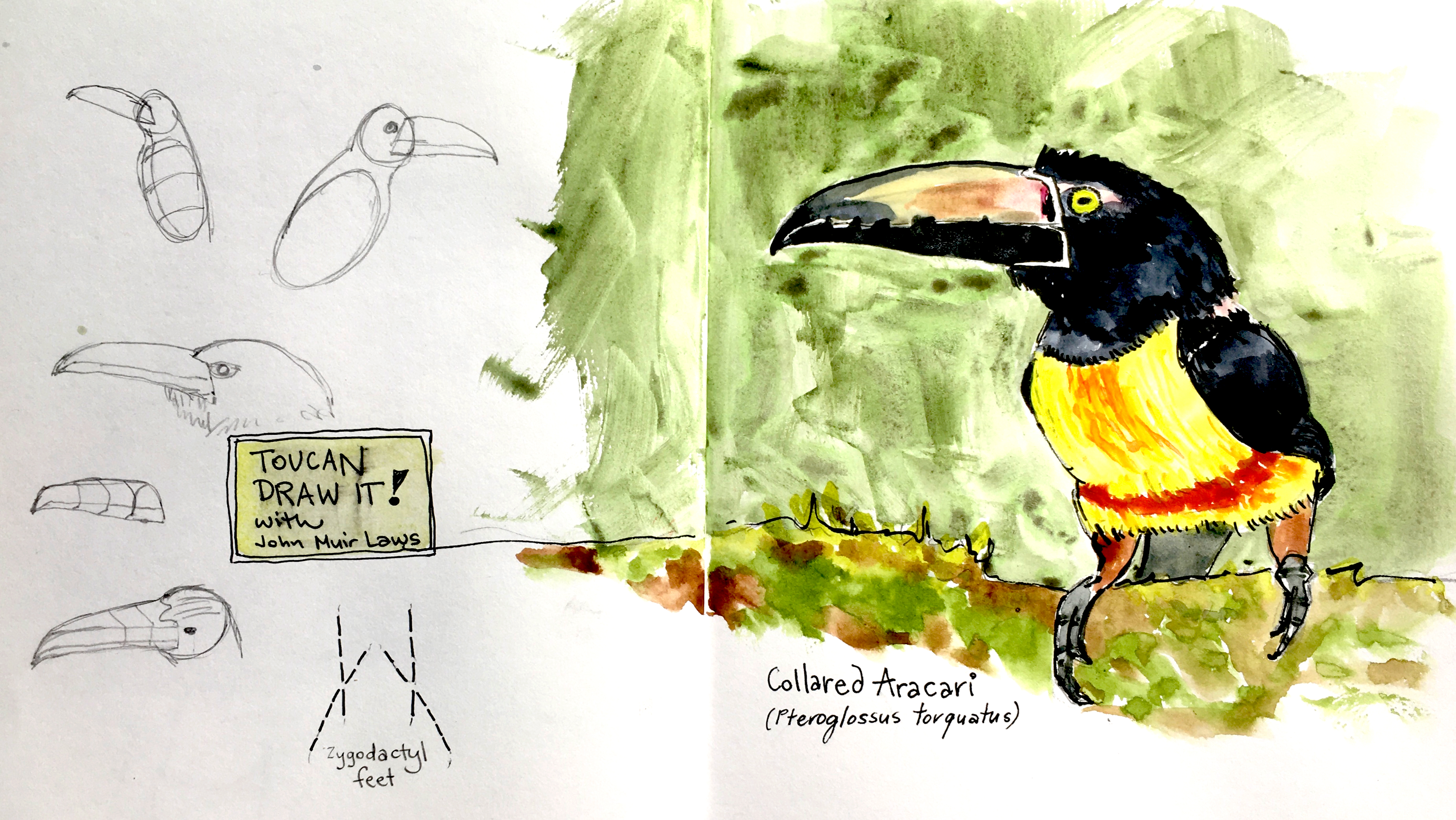
Sketching toucans with John Muir Laws. I always knew toucans had very oversized beaks, but look at that skeleton image! It’s nuts!

Tarantula hawks do it to tarantulas, mud daubers do it to other spiders. Steel-blue cricket hunters do it to crickets. Way to pack lunch for your kids.

This tiny (0.3 inch) lady* rappelled down from the light fixture to right above my computer. Cute!
*The males are even smaller than this.

Maples are scarce in the Santa Monica Mountains. They need cool, damp, protected shelter, which is in pretty short supply. But we do have two Acer species nearby (one native, one introduced), and today I visited both of them. Gotta love a tree with hairy balls, right?

Don’t overlook the teensy ones!
Guided by some online resources, I went looking for this flower by the pond at Rocky Oaks. I was expecting a plant between ankle and knee high (my wildflower book says it’s up to 16″/40cm tall). I scanned about but couldn’t see any likely candidates. Then I had the urge to just sit awhile right there on the bank.
You guessed it! I soon realized I was surrounded by the plant I’d come seeking — tiny (1.25″ high) scarlet toothcup plants with miniscule magenta flowers. Such a delight!

White sage has been widely poached from the Santa Monica Mountains (and elsewhere) to sell as ‘smudge sticks’ to folks with no cultural connection to the spiritual practice of smudging … yet another case of capitalism leading to species depletion.
After hearing me mourn the situation, Annette gave me this (nursery-raised) plant yesterday. I will try to keep it alive by practicing benign neglect — it wants no food and little water. First step will be getting it out of the rich potting mix and into the sandy, nutrient-poor native soil. Wish me luck with its nurture!

This species of orchid is native to western North America from western Canada to central Mexico. It lives on the banks of streams, rivers, and springs but prefers wetland regions like marshes. Today was the first time I’d seen one! I went looking specifically, and was delighted to succeed in my mission.