burnt hills

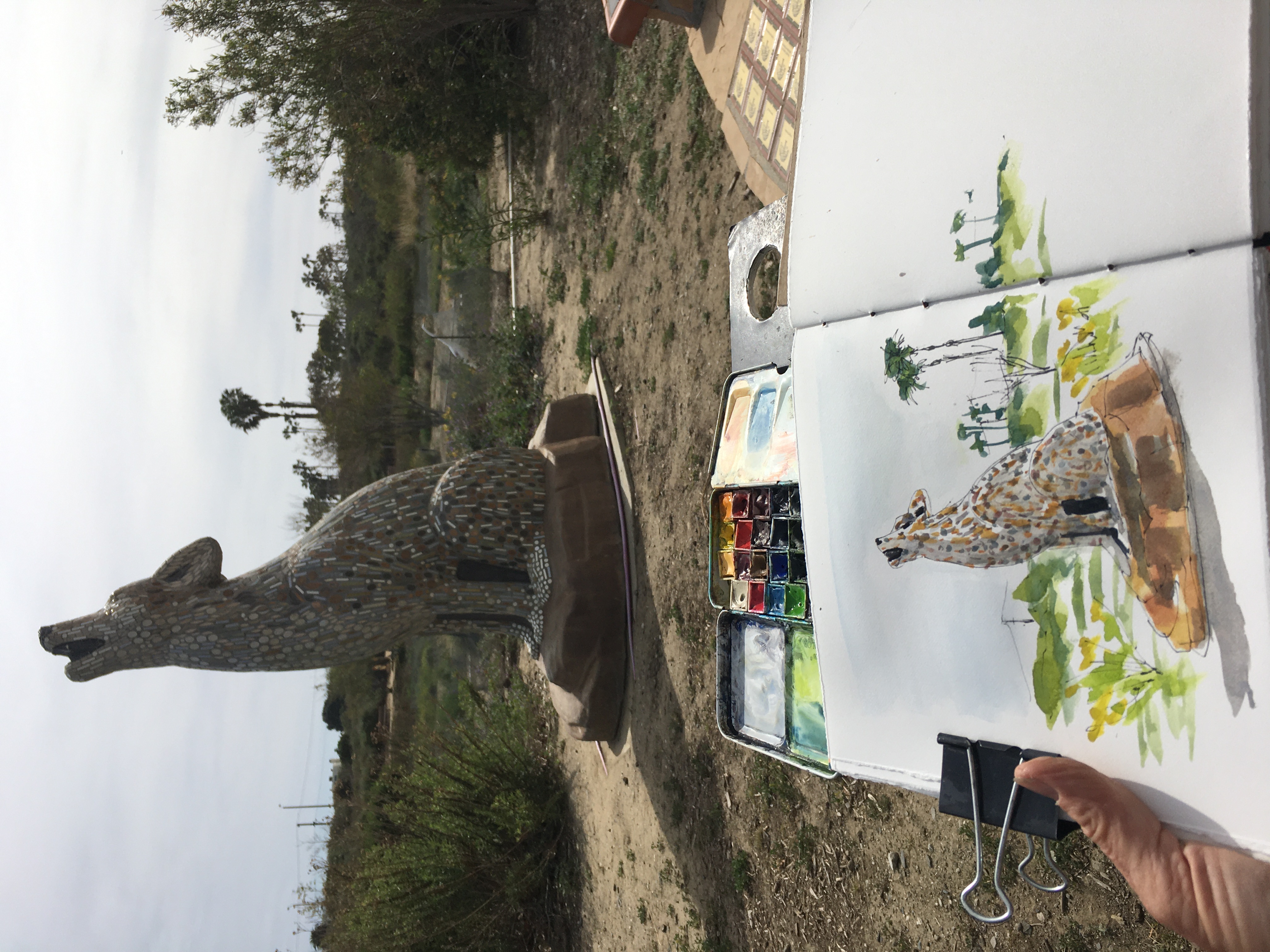
hawkstature

Bodie and I did a few laps of Legacy Park this morning, past all the mosaic statues. (Wow, looking at those photos I’m delighted by how different the park looks after 14 years of native plant growth.) We viewed the burned hills above town—the Franklin fire came right down to City Hall. We are so lucky more structures weren’t lost. Thank you, firefighters!

Butorides virescens

Green Herons are short and stocky (for a heron) with a thick neck that is often drawn down into the body. It’s only when they strike at food that you can see the length of the neck.

Although Green Herons are fairly common across the U.S., their population has suffered a decline of approximately 1.3% per year between 1966 to 2019, resulting in a cumulative decline of about 51%, according to the North American Breeding Bird Survey. In the past, people hunted Green Herons for food and controlled their numbers near fish hatcheries. Today they, like so many creatures, are negatively impacted by habitat loss from the destruction of wetlands.

Nycticorax nycticorax

The Black-crowned Night Heron is a medium sized heron with a long head and a funny way of making its neck disappear when at rest. A juvenile was hanging out at Legacy Park this morning. I loved the lime-green legs.

These birds are among the seven heron species observed to engage in tool use. They lure or distract fish by tossing edible or inedible buoyant objects into water within their striking range. Smart!

Oxyura jamaicensis

A new-to-me waterbird at Legacy Park! I was delighted by the bright blue bill on this male ruddy duck.

I’ve read that ruddy ducks are very aggressive toward each other and toward other species, but this fellow was behaving peacefully. Apparently they will even chase rabbits feeding on the shore. During courtship, males beat their bill against their neck hard enough to create a swirl of bubbles in the water. Pretty intense!

The genus name Oxyura is derived from Ancient Greek oxus meaning “sharp”, and oura meaning “tail”. Ruddy ducks were imported into the UK in 1948 and have since spread to Europe, where they are considered invasive.

Schoenoplectus acutus

The wetlands in Legacy Park are alive with red-winged blackbirds, great-tailed grackles, mallards, coots and egrets. I like to sit by the tules and watch the interactions. Today there were a lot more drakes (9) than ducks (2); the females were getting persistently pursued and didn’t seem too happy about it.

Plegadis chihi

I was walking the dog in Legacy Park when I spotted the distinctive shape of an ibis! It’s the first time I’ve seen one in America (they are very common in Australia). The white-faced ibis Plegadis chihi is sighted so infrequently in these parts that my birding apps didn’t even offer it as a possibility. But I checked with my naturalist friend Suzanne, and she confirmed the ID. It was a pretty metallic bronze-green colour. Made my day!