

My sister sent me a beautiful Skimming Stones plate, featuring that great Aussie icon, the Hills Hoist. I seriously wish I had one here!
My sister sent me a beautiful Skimming Stones plate, featuring that great Aussie icon, the Hills Hoist. I seriously wish I had one here!

My Christmas gift to my daughter Tui, honouring her urban farming days.
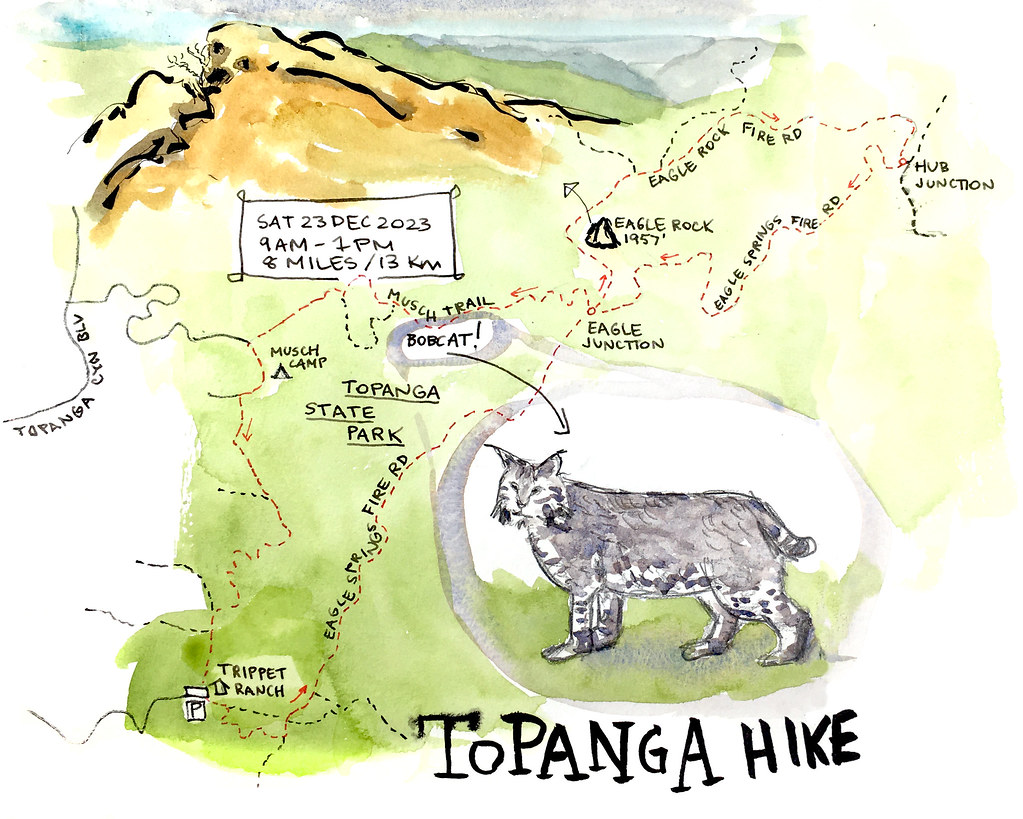
Thank you, nature, for the best gift — a bobcat sighting!

During the rains we had a surprise visitor, a blind snake! It’s our first time seeing this earthworm-looking reptile. Rena humilis is found in the southwestern United States and northern Mexico. It lives underground, sometimes as deep as 20 metres (66 ft). Having no need for vision, its eyes are vestigial, just two light-detecting black spots. The skull is thick to permit burrowing.
Its diet is made up mostly of insects and their larvae and eggs. It is found in deserts and scrub where the soil is loose enough to work, so I’m not sure what it was doing in our living room! I moved it outside, and noticed that my hands smelled like mushrooms afterwards. Very earthy.

It’s a good day for tea and reading under a blankie.

It’s that time of year when Christmas is mentally put to bed, and I suddenly look at my January birthday list and realize I have to get cracking.

Two of my dear friends have Boxing Day birthdays (Dec 26). I’m pretty sure neither of them read this blog, so I’m not ruining any surprises by posting their card here.

We are in the winter range of the white-crowned sparrow, Zonotrichia leucophrys. At various times of the year it is found over nearly all of the North American continent. This deep-bellied, deep-chested, broad-necked sparrow is a very rare vagrant to western Europe. In 2008, one was spotted in Cley next the Sea in Norfolk, England. To commemorate the event, an image of the bird was included in a window at St Margaret’s Church.

Toyons are fruiting abundantly all over our mountains (and in our yard), providing food for many birds and mammals. The tree depends on animals for seed dispersal, and our first winter rains are forecast this week. The seeds that are eaten and “planted” earliest in the wet season will have the longest time to establish themselves before the long hot dry season arrives. Eat up and poop, critters!
Only two pages left in the Perpetual Journal before I flip back to the beginning and start adding to the spreads. I’m pleased that I’ve managed to keep up the practice for (nearly) a full year, and am excited to see the pages fill out in the coming years.

I went on a Geology field trip with the California Native Plant Society. Besides learning a lot about our local rock formations, I was introduced to a federally endangered plant that I would have walked right past if I hadn’t been with native plant geeks. We have LOTS of tarweed growing in our mountains, but it’s the common annual type, Deinandra fasciculata. This one is a perennial woody shrub. Happy to have met it!
 hashiworks