Blog

Butorides virescens

Green Herons are short and stocky (for a heron) with a thick neck that is often drawn down into the body. It’s only when they strike at food that you can see the length of the neck.

Although Green Herons are fairly common across the U.S., their population has suffered a decline of approximately 1.3% per year between 1966 to 2019, resulting in a cumulative decline of about 51%, according to the North American Breeding Bird Survey. In the past, people hunted Green Herons for food and controlled their numbers near fish hatcheries. Today they, like so many creatures, are negatively impacted by habitat loss from the destruction of wetlands.
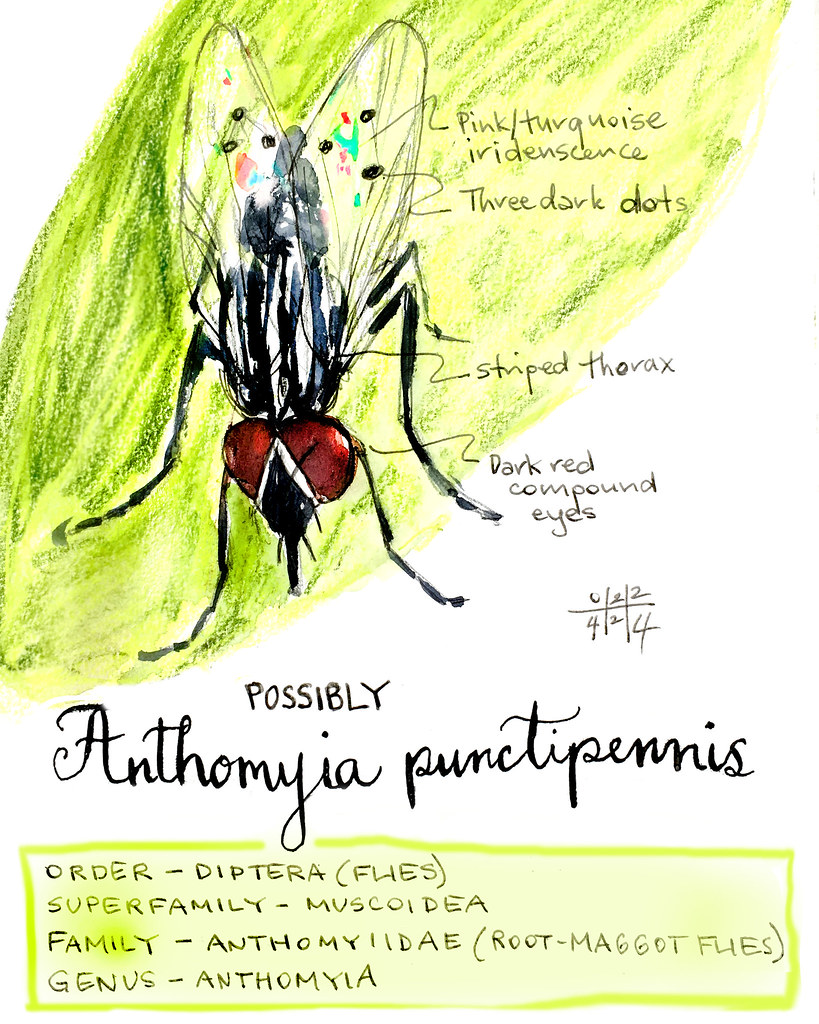
Anthomyiidae

After picking sixty (60!) snails off our little orange tree this morning, I noticed this handsome fly on one of the ravaged leaves. I am no entomologist, so the ID could be wrong. Looking at the distribution map in iNaturalist, Anthomyia species are far more common in the Southern Hemisphere than the northern, so possibly I’m way off. I was attracted to the strong dark dots on the wings; I suspect that are a key feature for identification.

Aphyllon franciscanum

This week in the PerpJo—according to Milt McCauley (Wildflowers of the Santa Monica Mountains), two species of the Broomrape family are native to the SMM, but very rare. Clustered broomrape (Aphyllon franciscanum) is found in chaparral and coastal sage scrub. It has fleshy stems 2 to 8 inches (5 to 20 cm) high, covered with soft hairs, and bell-shaped flowers 1 to 4 inches (2.5 to 10 cm) long. Broomrape is parasitic on the roots of other plants like chamise, sagebrush and buckwheat.

Big thanks to Annette for spotting this rarity. Actually, she also spied the horned lizard this week last year. I’ll have to be sure to hike with her in week 16 next year too. Who knows what she will find for us then!

Lampropeltis californiae

Spotted this handsome striped reptile out on the trail. The California kingsnake (Lampropeltis californiae) is endemic to the western United States and northern Mexico, and is found in a variety of habitats, including woodland chaparral, grassland, deserts, marshes, and even suburban areas. It is non-venomous, and kills its prey by constriction.

Wild California kingsnakes are typically encountered at a length of 2.5-3.5 feet (76 – 107cm), though they can grow larger. This one was smaller, maybe 18 inches / 45cm long.